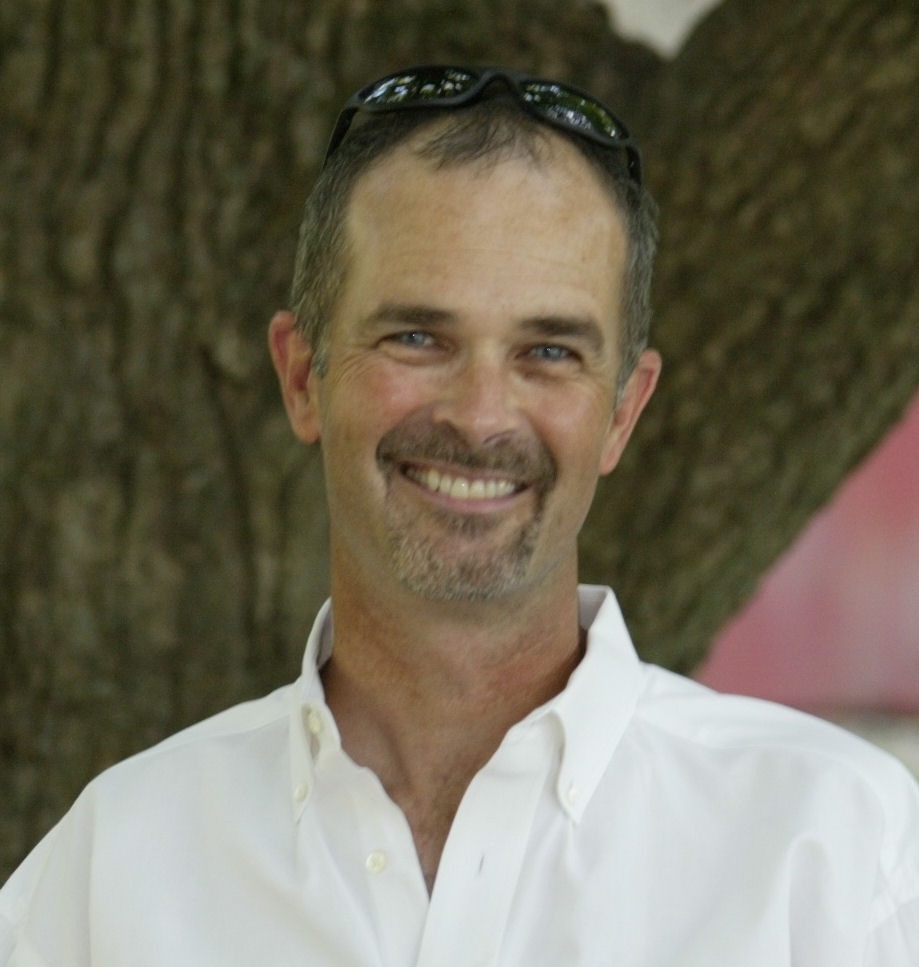
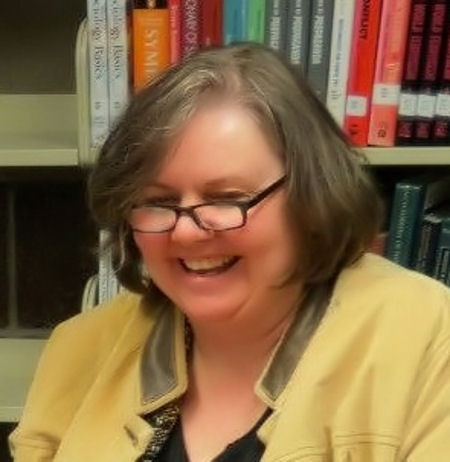
Meet Don Lafferty, Chief Marketing Officer of Mingl Marketing and social media guru!

by Tammy Burke

previously posted on http://glvwgwritersconference.blogspot.com/
20140222-163611.jpg

Hi Don,

I am delighted to hear you will teaching a pre-conference workshop THE ESSENTIAL ELEMENTS OF EVERY AUTHOR’S ONLINE MARKETING STRATEGY. Our attendees are sure to gain so much insight! I remember leaving one of the monthly Liars Club Coffeehouse for Writers meetings with my head spinning with the wealth of good information after hearing you talk about the optimal ways to use Twitter for marketing. And I see that social media isn’t the only thing listed which you will be covering during this workshop. I hope everyone brings a notebook!

I was wondering if you might whet our appetites even more by giving us an example or two about the workshop.

Don Lafferty: Facebook is the eight hundred pound gorilla of social media. Seventy-five percent of Americans are logging into Facebook for on average, more than fifteen minutes a day. So it makes perfect sense to start your social media strategy with a Facebook author page to build community in much the same spirit that we build an email list.

But Facebook has stacked the deck against us, depressing the number of people who see our posts to somewhere between one and three percent of the communities we’ve all worked so hard to build.
So how does an author reach the people who have made a deliberate decision to connect with their Facebook page without breaking the bank on Facebook ads?

I’ll cover that in my seminar.

With the dizzying, ever-growing plethora of choices in social media networks, how does an author know in which ones to invest their most valuable possession – Time?

I’ll go through a step-by-step evaluation to help you determine which social media channels are best for your writing goals and the most efficient, effective ways to manage the time you spend tending to them.

Have you ever changed someone mind’s from believing social media and time management shouldn’t belong in the same sentence to understanding its value?

Don Lafferty: It’s always prudent to weigh the value of the investments we make in the goals we want to accomplish, in fact, it would be foolish not to. I don’t see that I’m changing anyone’s mind as much as giving them the facts they need to make a decision within their comfort zone. Time management is essential to every part of our careers, but information is the key to setting this balance in everything we do.

Changing direction for just a moment…The Liars Club is a wonderful group of Philly-area writers who pay it forward in the writing community by offering advice and free events. How did you become a part of this? What do you like best?

Don Lafferty: I became part of the Liars Club when my good friend, Jonathan Maberry, invited me to join. That’s the short answer. The long answer starts just like every other writer’s journey – with a passion for storytelling and a knack for stringing words together. Eventually those two things brought me to The Writer’s Corner in Doylestown where I met Maberry. Within three years, using Jonathan’s platform as my test lab for MySpace, Facebook and Twitter, we were among the pioneers of the use of social media for writers.

When the original eight Liars decided to invite more people to join, Maberry – who’s always on the lookout for a win-win – brought me in as a way to elevate the overall social media savvy of the group.

Being part of the Liars Club has opened so many doors for me as a writer, a speaker and a marketing consultant, but, at the risk of sounding corny and trite, the friendships I’ve made through my association with the Liars Club trump every other awesome thing about it. Being a part of the community of support for aspiring writers that has grown around our activities is something I could have only dreamed of when I walked into the Writer’s Corner back in the spring of 2005.

We’ve seen social media grow and change. For one, the teenage crowd seem to be moving away from FaceBook and are using Snapchat. What are your thoughts about the evolution of social media? How important is it to know what is likely to be trending as you’re trying to reach your optimal audience? What do you believe are today’s most advantageous social media sites?

Don Lafferty: Tammy, I’m surprised all the time by the innovative ideas people are coming up with to slice and dice the social media landscape into new and innovative ways for people to connect, share and collaborate. The evolution of social media is going to continue to drive toward a more seamless user experience, where the boundaries of a media channel will no longer be an impediment to sharing and discovering new things right where you are in the palm of your hand, or using a wearable device like Google Glass.

The importance of keeping pace with the changes in social media is critical to people who do what I do, but it’s not easy. My clients depend on me to have a solid understanding of the various social media channels, and in turn I depend on specialized experts to sift through all the latest and greatest shiny objects so I can figure out if and how to incorporate them into a client’s strategy.

For writers, there are a few social media channels that are no-brainers, like Facebook, Goodreads, Google Plus and maybe Twitter. After that, it all depends on what the writer writes, and where their target connections are playing in social media.

For example, a cookbook author should be on Pinterest. Maybe even Instagram. But a creative nonfiction author probably wouldn’t get much traction for their work in a community like that.
A writer’s content will dictate the social media channels into which they should jump.

You have an interesting blurb on your company’s website about how in 2005 you realized the marketing potential of social media after having daughter-assistance creating your own MySpace page. Presumably, this was one of the first steps which led you to becoming a social media guru. Could you tell us a bit about this? Also, I was wondering if there was a particular catalyst which inspired you to become the Chief Marketing Officer of the digital marketing agency, Mingl Marketing Group?

Don Lafferty: You’re absolutely right, Tammy. About a year after I became a regular attendee of what would become the Coffeehouse for Writers, Maberry orchestrated a competition designed to pit two groups of writers against each other to see who could successfully pitch and sell a nonfiction book first.

In the end, I wound up on a team with Kerry Gans, Jerry Waxler, Keith Strunk, Jeanette Juryea and Carron Morris. We decided to pitch a book about all the ways the Internet had changed how people were able to connect.

We decided to write about business, medicine, romance, and sex among other things, so when we divided up the research, I drew the research on Virtual Communities, which at the time, was Myspace, Xanga, LiveJournal, listserves and Yahoo groups. I went home from that meeting and asked my then, ten and twelve year old daughters, to show me how to get on Myspace. Once I started to play around with it, my marketing brain exploded with ideas for authors and small businesses to connect to the people in their target demographics at a level never seen before.

This was 2006, before the term “social media” had even been coined. Back then, writers didn’t build platform by blogging, but by working in the field and writing magazine articles, so I set about querying all types of markets to write about the uses of Myspace for marketing. By 2008 I was in business and the next year I left my full time job to pursue a full time career as a freelance social media marketing consultant. As the business grew I eventually had to form a company to scale up, and Mingl Marketing was born with the help of my partners, Ron Musser and Mike Gospodarek.

Do you find more differences than similarities between what small businesses should use with social media versus a writer looking to increase his or her readership and book sales?

Don Lafferty: Huge differences. [Most] writers are people. [Most] brands are not. The relationships people have with authors are very different from their relationships to brands. Although both types of relationship can be quite passionate, an author is the brand and rarely has professional branding consultants, PR consultants and marketing and communications professionals vetting their content. Consequently, an author can make connections in social media channels that will foster loyalty in readers in a way that brands can rarely accomplish.

But there is a dark side to this, and we’ve all seen it. An author whose core message is “Look at me! I’m so cool! Buy my book! Look at me! Buy my book! Oh, and politics! Come to my book signing! And bring your whole family! Oh and religion! And buy my book! Did you buy my book yet? Because I have a new one coming out in 9 months, so hurry!”

You get the picture.

Just out of curiosity, how does one go from testing guidance systems for the B-1 bomber program in the 1980s to being described as “one of the strongest technical communicators in the business?”

Don Lafferty: Because I have always been a writer and I’ve always sought out adventure. These have been the main themes of my life since I was a teenager.

I joined the Air Force to see the world, and it was one of the single most important and beneficial decisions I’ve ever made, but even in the Air Force, I wrote for the base newspaper, wrote almost every piece of important correspondence for almost every one of my superiors and became responsible for narratively documenting many of our test protocols and internal manuals. So even though I spent my days flying, I spent my time on the ground writing about the work we were doing.

Upon my discharge from military service, the best paying jobs I had offered to be were sales and marketing positions where I spent most of my time telling stories. By the age of twenty-six I was routinely speaking to large audiences and wherever I worked, I was the guy that had to craft important written correspondence.

So my time in the military gave me a solid background in technical writing, but I was already a writer before I got there.

Could you tell us more about your fiction writing?

Don Lafferty: I am all over the place with this. I love to read genre; horror, crime, and noir specifically, and I love to write that too, but the past couple of years I’ve taken a turn toward what I know – family life, relationships and the tangled web in which so many people live their lives.

I prefer short form at this time in my life because I know what it takes to write long form and I’m just not ready to make that commitment, but I have that to look forward to. I hope.

And last question…is there was one solid piece of advice you tend to share when asked “How do I become successful?”

Don Lafferty: Seek the company of successful, positive people in the field where you endeavor, and when you find them, listen carefully. Contribute. Support, don’t hate. And be kind.

Do not expect success to find you. You need to chase it as if your very life depends on it, because it does.

_______________________________

Don Lafferty’s short fiction has appeared in NEEDLE MAGAZINE, CRIME FACTORY MAGAZINE, SHOTGUN HONEY and a number of other markets and anthologies. He’s written corporate communication, marketing and advertising copy, and feature magazine articles.

Don is a regular speaker, teacher and the Chief Marketing Officer of the digital marketing agency, Mingl Marketing Group. He’s a member of the Liars Club, the social media director of the Wild River Review, and serves on the board of directors of the Philadelphia Writers’ Conference.
___________________________________

Tammy Burke, GLVWG member, 2011 conference chair and past president, has published over 300 newspaper and regional magazine articles. She has interviewed state and local government officials, business and community leaders, everyday folk and celebrities. Currently, she is in the revision stage for her first YA fantasy adventure book, the first in an intended series. When not writing, she works in the social service field and is a fencing marshal in the Society of Creative Anachronism (SCA).
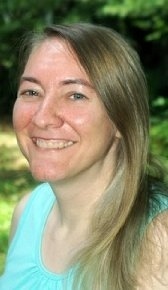
Meet Sally Apokedak, Associate Agent with the Leslie H. Stobbe Literary Agency!

by Tammy Burke
Reposted from http://glvwgwritersconference.blogspot.com

20140218-171523.jpg

Hi Sally,

We are so excited to have you as one of this year’s conference faculty! Not only do we get to benefit from your intriguing pre-conference workshop Making Your Plodding Prose Prance and Your Plot Dance and your expertise as an agent but we also get to interact with someone who has spent years helping children’s literature reach happy readers and (based on some of your blog posts) has a tongue-in-cheek whimsical sense of humor. I want to say thank you for agreeing to be interviewed.

Sally Apokedak: Well, thank you for having me. I’m happy to be here.

What an interesting childhood you must have had…staying at campgrounds, driving through Europe, living East, West, North and South in the United States and Taiwan. I’m curious, do you think moving around and adventuring with your family influenced your love of reading and the story genres you prefer?

Sally Apokedak: I come from a family of readers. That is the first reason I love to read, probably. Both of my parents read and so did all my older brothers and sisters. We didn’t have videos or video games when I was a kid. So we played outside or we read.

But, yes, my travels did have an influence on my love for reading, I think. I’ve always loved to travel and to study new cultures. And in books you can travel all over the world without spending a lot of time and money. Not quite as good as going in real life, but a nice way to learn about new people and cultures if you can’t afford to go in person.

You mentioned on your website the first book to “ravish” you was Treasure Island which then led you to a plethora of other stories. Do you remember what made you pick Treasure Island first? And what captivated you most about the story?

Sally Apokedak: A condensed version of Treasure Island is what I first fell in love with, actually. It was the summer I turned eight years old. My mother had a collection of Reader’s Digest Condensed Books, called Best Loved Books for Young Readers. She told us she’d pay us fifty dollars if we could read all 48 books over the summer. I didn’t get the fifty dollars, but I got something worth much more than money. I still have these books. They’re prominently displayed in my living room.

Treasure Island was the first one I read, and I loved it so much I forgot all about the monetary motivation. I loved the danger, I loved Jim, I loved the ship and the sea, and I loved the treasure. Who doesn’t want to find a treasure? What kid has ever lived and not wanted to find a treasure?

You mention you love children’s books–from PB to YA–with your favorite being fantasy (and a liking of dystopia and fairy tales). Do you think these types of stories convey a different message than stories targeted for adults?

Sally Apokedak: Hmm. Interesting question. I think what I love about children’s books is that they usually end with hope. I’m not sure adult books do. I have had times in my life where I’ve read only adult books, including when I was a teen, but even then I was much more of a genre reader than a literary reader. I liked mysteries and sci-fi and fantasy. And I think those books all end with hope. Adult literary books, it seems to me, often end in a confused way or with no hope offered.

I think sci-fi and fantasy for all ages, allows the author to look at real world problems in fresh and non-threatening ways. You can see human nature in fantasy, you can face danger in sci-fi, but you don’t have to worry about it being real. It can be more dangerous and still feel healthier and safer, I think.

I know these three questions you must get all the time but… What made you decide to be an agent? If your dream submission was delivered today, what would it look like? And what is your biggest no-no in a pitch session?

Sally Apokedak:

1) I’ve always wanted to be an agent. What finally made me decide to do it was that my life got to the place where I could do it. My husband was a quadriplegic and I was his caregiver. He died in 2007 of colon cancer, and I moved over close to my parents so I could care for my father, who was in a wheelchair, paralyzed from a stroke. He died in 2009 and the day after his funeral, my mother fell and broke her pelvis in three places. So I moved in with her and cared for her until she died in 2012. So in 2012, I found myself with two grown kids and no more disabled people to care for. I was free to travel and I had a lot of free time to fill. I met Les Stobbe that year and asked him to teach me how to be an agent, and, happily for me, he agreed to take me on.

2) Dream submission? I have signed several clients who have sent me dream submissions. If a manuscript keeps me up reading late so I can finish, it is a dream submission. What I want is a character who needs something, who is actively seeking to gain something despite the roadblocks in his way, and who has an interesting voice. If he’s funny and self-sacrificing, and a little naïve, or honest to a fault, so much the better. And if he’s an orphan, well, then you’ve hit all my sweet spots.

3) Biggest “no no” in pitch session? I hate to list them, because sensitive writers will immediately think they’ve broken the rules and all the agents are laughing at them. I think if writers just act like they do when they meet anyone for the first time, things will be fine. Be pleasant. Be polite.

Probably the one thing that is really hard for me to deal with is a person who sits across from me and starts telling about eight or ten or twelve books she’s written. I immediately shut down. I can’t hear anything. I see the person’s lips moving but it all sounds like, “This-this-this-this-this-this-that. And this-this-this-this-this-this-that. And then there was that and that and that and that.” None of it means anything to me. It just all blurs together like food that went down in separate helpings of greens and fruits and meats, but came back up in a swirly mess. So don’t regurgitate ten projects in fifteen minutes. I simply can’t pick through that kind of mess looking for gems. My brain isn’t fast enough to handle that kind of info overload.

Think of it this way—you have fifteen minutes to make me fall in love with you and your work. Will you do that best giving me a fifteen-minute video on fast-forward that tells your whole life story? Or will you do that be telling me one story about yourself that makes me cry? Move me. Tell me one story. Make me laugh or make me cry. If you do that, I’ll ask for more. Trust that.

What a wonderful experience getting to work with Jeanne DuPrau, Ingrid Law and Shannon Hale. (I have to admit I really enjoyed the Books of Ember) How did you become involved with Kidz Book Buzz blog tour and can you share one of your favorite experiences with it?

Sally Apokedak: The Books of Ember were great!

I founded Kidz Book Buzz blog tour. I love children’s books and I wanted to promote them. The perks were getting to work with a bunch of really cool authors. Some of those authors we toured have become friends and I value that above all.

Being a present YA contributor of Novel Rocket, you advised in one of your blog posts to “take your passion and put it into a form that will sell.” What advice would give a writer who is hoping to do that?

Study the market. You don’t have to be a sellout. You don’t have to compromise. Write what you love, but put it into a package that is selling. So if you love poetry, fine. Write eight four-line poems for toddlers and sell them as a board book. Or write sixteen eight-line poems around the theme of Halloween or Summer or School or Food and sell them as a picture book for the K-3 crowd. Look at what that age group is studying in science and write poems about health. If you love books with unicorns and you can’t stand vampires, that’s fine. Write a story with unicorns. But make sure it’s a story that speaks to children today and not a story that would have spoken to children fifty years ago. If you want to write fantasy but romance is what’s selling, make your fantasy a romance. If you want to write mysteries but fantasy is selling set your mystery in a fantasy land. Take you passion and fashion it to fit the market.

I like the description of spotting the snoozing passages in manuscripts and poking them with a stick to get them moving with your pre-conference workshop Making Your Plodding Prose Prance and Your Plot Dance. I was wondering if we might, maybe, get a bigger teaser on what we’ll learn?

Sally Apokedak: I have to admit, I cringe a little every time I see that title. I’m not sure why we called it that. I think what happened is that I was offering two classes—one on making the plot dance and one on how to wake up slumbering prose. Because of the way the classes needed to be set up for the conference we combined the classes and somehow the title came out as it did.

So how’s this for a teaser: In the part of the class on prose, I’ll discuss why we shouldn’t use so many figures of speech in one title. Alliteration is great, but a little dab’ll do ya.

The part of the class that is about plot will cover plot from beginning to end. I map out a plot that works—one that is common in best-selling children’s books.

Please, if anyone reading here is coming to my workshop, bring your first chapters. We’re going to be working on them in class.

Last question…I really enjoyed reading about your calendar method of getting tasks done. What a wonderful way to not stress about the work load and still get everything done. How did this tool come about?

Sally Apokedak: Desperation. Actually, one of my clients, Lisa Fowler, sent me a lovely, fancy-schmancy appointment book for a Christmas present. I immediately began filling in the days. It was apparent right away that this was the perfect tool for relieving stress, because I didn’t have to waste energy trying to remember things. The minute a project came in, it went on the calendar and then I didn’t have to remember it or worry about it. It also made me more productive because I never had to spend time thinking about what I should work on next. At the start of the day I checked my projects and off I went. Then, at the end of the day, I moved any that I didn’t get to. I plugged them into another spot.

Again, we are looking forward to having you!

Sally Apokedak: Thanks. I’m looking forward to being there.

_________________________________________

Sally Apokedak is an associate agent with the Leslie H. Stobbe Literary Agency.

She’s been studying, reviewing, and marketing children’s books, as well as giving writing instruction for a dozen years. As the manager of the Kidz Book Buzz blog tour she was privileged to work with best-selling and award-winning authors such as Jeanne DuPrau, Ingrid Law, and Shannon Hale. She is presently the YA contributor to Novel Rocket and she teaches at general market and Christian Writers’ conferences across the country.

She is interested in children’s books from picture books to young adult (Christian or general market), nonfiction for all ages (Christian or general market), and women’s novels (Christian market). Find out more at sally-apokedak.com Submit to Sally at submissions@sally-apokedak

Looking for:
Picture Books: I’m looking for quirky, fun, characters and delightful language, with lines that roll and rhymes that rock. Conflict and growth for characters always helps.

Middle Grade Books: I’d love some funny boy books. Boy scientists and boy geniuses are great. I love fantasies, but really want anything with a strong voice.

YA Books: Fantasy is my favorite, and if there’s romance, I love it even more. I still like dystopian, and fairy tales. I love mysteries.

Nonfiction For All Ages: I’m interested in devotional books, Christian living, science for young children, and biography. But you may try me on anything.
Adult Inspirational: I’m looking for adult books for the Christian market, particularly fantasy and romantic suspense.

Any picture books that rhyme where all the rhyming words are one or two syllables, are not going to be right for me, I’m pretty sure.

Not looking for: I am also not a huge fan of issue books and preachy stories. Supernatural books, with angels, demons, or any mix thereof, will probably not catch my fancy. I’m not salivating for werewolves, vampires, ghosts, fairies, or zombies. I’m not into dark and angsty books. I like endings that are full of hope.

___________________________________________

Tammy Burke, GLVWG member, 2011 conference chair and past president, has published over 300 newspaper and regional magazine articles and over 200 photographs. She has interviewed state and local government officials, business and community leaders, everyday folk and celebrities. Currently, she is in the revision stage for her first YA fantasy adventure book, the first in an intended series. When not writing, she works in the social service field and is a fencing marshal in the Society of Creative Anachronism (SCA).
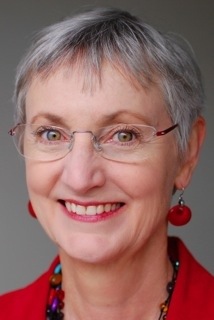
Meet Jennifer R. Hubbard, YA author!

by Tammy Burke

20140217-153753.jpg

Reposted from http://glvwgwritersconference.blogspot.com

Hi Jennifer,

It is such a pleasure having you join us as one of our conference faculty this year. With three YA novels, submissions in Willow Review and North American Review, and a short story in the 2011 anthology Truth & Dare under your belt, our conferees are sure to gain wonderful insight from you.

Jennifer R. Hubbard: Thank you! I’m looking forward to being there.

I am curious, your first two novels, The Secret Year and Try Not To Breathe, are written in a male point-of-view…did you find that challenging? Is a female POV easier? Or doesn’t it make a difference? Also, do you come up with your protagonists first or the story idea?

Jennifer R. Hubbard: I grew up around men and boys. I have male relatives, friends, coworkers, and a husband. I grew up reading the work of male writers. So I have many models for a male voice. Besides, all characters are people first.

I have both male and female characters in my head. In the short stories I published before I started publishing novels, about half my main characters were male and half female. The protagonists and story ideas show up together; each story seems to have its natural main character.

With the Young Adult market being so popular I have to say what a brilliant idea to offer two sessions, Part 1 and Part 2 of Teen Voices: Writing YA at the conference. Can you give us a teaser on how one finds an authentic YA voice?

Jennifer R. Hubbard: One advantage most of us have is that we’ve been teenagers. We’ve lived those years. While external fashions and technologies change over the generations, emotions and watershed experiences don’t; we can tap into that.

I like that your protagonist, Maggie, in Until It Hurts To Stop has the same hobby, hiking, that you do. (I peeked on your website). Does any of Maggie’s hiking experiences coincide with yours? Have you ever known any one like Raleigh Barringer, the ringleader bully from your story?

Jennifer R. Hubbard: I did borrow some of my own hiking experiences for the book, such as the rattlesnake encounter, and a very windy mountain summit where I resorted to crawling.

Raleigh isn’t based on any single, real-life person. But I think we’ve all known bullies. Raleigh doesn’t have much patience with people, and she feels better about herself when she’s asserting her own superiority, cutting other people down. She has had problems of her own, but unfortunately it hasn’t led to her being very empathetic, so far.

I’m also curious, does hiking help you when working on story ideas?

Jennifer R. Hubbard: Absolutely. I try to take a walk, even a short one, every day. Often my mind will solve a writing problem while I’m walking, but it’s good to get exercise in any case.

I like that you tackle real issues teens face such as bullying and suicide. What has been the inspiration to write on these topics?

Jennifer R. Hubbard: They’re important issues, and they are things that people really face. But I don’t write about a topic unless I think I have something to say about it, and something that’s maybe a little new or unusual take on the subject. For example, in Try Not to Breathe, I wanted to focus on what it’s like for a character to put his life back together after a suicide attempt. In Until It Hurts to Stop, I wanted to focus on the long-term effects of bullying, the way it can affect people’s thinking and their relationships for years afterward.

I understand that you’ve been writing since you could hold a crayon. Can you remember the gist of any of your early creations? Also, what were some of the first stories which captivated you and which ones have stayed with you?

Jennifer R. Hubbard: I think I wrote one about Christmas, and I was so young that I had no sense then what time of year Christmas was. I set it in July and had people eating corn on the cob. I used to illustrate my stories with crayons and staple them together.

I read everything I could get my hands on. In addition to the children’s books my parents gave me, and that I found in the library, I raided the family bookshelf in our living room. It contained, among other things, a first-aid manual, a book of photographs, a book of poetry, and my mother’s nursing-school textbooks. I read everything even if I couldn’t understand it. I still have the poetry book. It was produced in 1969, and has this psychedelic neon cover.

Could you tell us a little bit of KidLit Authors Club and YA Novelists Pushing the Boundaries of the Genre? What are your thoughts about synergy among writers?

Jennifer R. Hubbard: The Kidlit Authors Club (www.kidlitauthorsclub.com) is a group of authors from the mid-Atlantic region who work together to promote, market, sign, and sell our books at stores, schools, libraries, conferences, and festivals throughout our region. Doing book signings can be such a lonely business; through the club, we can do group events instead. It’s more fun, and it offers book shoppers a wider variety of books. Because there are so many of us, we can almost always muster some writers to do any event we’re invited to. Our authors write for kids of all ages, picture books through young adult, so we can do events for many different age levels. Teaming up together this way has given us more opportunities, as well as giving more flexibility to the stores and libraries and schools. It has enabled us to support one another in many ways, personal and professional.

YA Outside the Lines (http://yaoutsidethelines.blogspot.com/), subtitled “YA Novelists Pushing the Boundaries of the Genre and Writing from the Heart,” is a group of YA authors who do a joint blog. (I also have my own individual blog at http://jenniferrhubbard.blogspot.com/). Holly Schindler coordinates YA Outside the Lines. We have a topic each month, and we each have a certain day of the month to blog on that topic. I like it because it only takes a one-day-a-month commitment, and readers get to see so many different takes on each topic.

I highly recommend authors finding other authors: whether for critique groups, swapping professional tips and information, doing promotional events together, or just giving emotional support and mentorship. This is a tough profession, full of uncertainty and rejection. It is immensely helpful to find other writers to share the journey with.

What advice do you think is most important for writers to know?

Jennifer R. Hubbard: Read a lot. Write a lot.

Last question…What is next on the horizon for you?

Jennifer Hubbard: I have three books out there right now, and my works in progress are at various stages of completion.

____________________________________________________________

Jennifer R. Hubbard lives and writes in the Philadelphia area. Her short fiction has appeared in literary magazines including Flashquake, Willow Review, and the North American Review, and children’s magazines including Cricket. In 2010, Viking/Penguin began publishing her contemporary young-adult novels.

The Secret Year, a story of a boy coping with the tragic end of a secret relationship, was on YALSA’s Quick Picks List and the Indie Next list. Try Not to Breathe, in which a boy recovering from a suicide attempt befriends a girl with many questions and many secrets, received starred reviews from Kirkus, Publishers Weekly, and Library Media Connection. Jennifer’s most recent novel is Until It Hurts to Stop, about a formerly-bullied girl whose nemesis moves back to town.

When not writing, Jennifer is usually hiking, reading, or at the library. Online, she can be found at http://www.jenniferhubbard.com.

____________________________________________________________

Tammy Burke, GLVWG member, 2011 conference chair and past president, has published over 300 newspaper and regional magazine articles and has interviewed government officials, business and community leaders, everyday folk and celebrities. Currently, she is in the revision stage for her first YA fantasy adventure book, the first in an intended series. When not writing, she works in the social service field and is a fencing marshal in the Society of Creative Anachronism (SCA).

Meet “The Art of Falling” Author Kathryn Craft!

by Tammy Burke
[originally posted on GLVWG conference blog http://glvwgwritersconference.blogspot.com ]

20140212-221943.jpg

Hi Kathryn,

What an exciting year for you with having your first book THE ART OF FALLING recently released and already going into its second printing, and having a second book WHILE THE LEAVES STOOD STILL due to be released next year. Congratulations! It is indeed a special pleasure to see “one of our own,” who has been a GLVWG “Write Stuff” Conference Chair herself, experience such an exceptional debut.

KATHRYN CRAFT: Thanks so much Tammy! The book was only six days past its publication date when I found out that it was selling beyond expectation, and that they were going back for the second printing. If my agent and the publisher hadn’t already had several back-and-forths on it when I discovered the email thread, I wouldn’t have believed my eyes! A dream come true.

THE ART OF FALLING uses a masterful and brilliant format threading a dual story — Penny’s present, trying to figure out how to live with her 14 story plummet, and a look at her past and her choices which put her on the balcony that fateful night. I’m curious, what was the deciding factor which made you tell the tale this way?

KATHRYN CRAFT: I discovered it by accident. My first opening showed Penny out on the ledge about to take the fateful plunge, and due to its high drama I suppose, this incarnation placed third in a state-wide novel opening contest. But I couldn’t sustain the tension. The question raised by this incident is “Oh no—will she survive?” The reader turns the page, sees Penny wake up in the hospital, and yep—question answered. Book over.

Important lesson learned: the story question must sustain the reader until the end of the book. And so began the intense period of learning about story structure that resulted in my work as a developmental editor and prompted the Incite Me! workshop I’ll be teaching before the conference.

Turns out the fall wasn’t the inciting incident: it was waking up afterward, and what Penny decides to do with that. The baker on whose car she landed, her hospital roommate, and the doctors all want to know how she parted from that balcony, but Penny doesn’t have the energy or the will to face it—she wants to know how she’ll move again, and live up to her disappointing body’s zest for life.

At this point I realized I had two strong story questions: what happened to make Penny fall from the very height of her dream career, and how would she make something of this extraordinary second chance from rock bottom? These questions “incited” the story’s two story lines, which I then interwove. Only at the end of the book, when Penny has healed, can she face the missing piece: that fall.

An inciting incident is rarely straight-forward. Because it must set up the entire book its facets can be difficult to craft. In the pre-conference workshop we’ll take a good hard look at this crucial story element so everyone can appreciate its ability to bind the reader to the protagonist for the length of the entire story.

I find it ironic that your protagonist, Penny, who is easy for a reader to get a deep sense of, never has a physical description written in your book. How did you do that? And why?

KATHRYN CRAFT: Although I employ hints from various characters as to what Penny looks like, I am not big on physical description in general, unless it adds depth to the characterization or pushes along the story line. But since I orchestrated the cast of secondary characters according to their differing relationships with their bodies and food, I do describe them to some extent.

Penny was different. Obviously, since she has an aberrant body image, what she looks like might seem to be of utmost relevance—but she’s an unreliable first-person narrator, so we wouldn’t be able to believe her anyway. I recognized an opportunity for the reader to enter the story more deeply by contributing his or her own body bugaboos to Penny’s body. I look forward to speaking to book clubs and hearing people argue about what Penny looks like!

In my mind, the Penny that needs expression isn’t about the parameters of her body. It’s the tender creative core that wants to find its way to the sun—and in that, Penny could be any one of us.

Do you think paying it forward by being a part of the writing community, such as previous board positions with GLVWG and now, the Philadelphia Writers’ Conference and the new Women’s Fiction Writers Association, has helped with your writing career? Also, what advice would you give someone new to volunteering and may be shy?

KATHRYN CRAFT: I met my own writing partner, Linda Glaser of Ithaca NY, at the 2005 Write Stuff conference. Linda is far from an extrovert, but knew she needed to emerge from her solitary writer’s life if she stood a chance of seeing publication. Her goal was to go to a different regional conference each year and try to meet a few people. That didn’t work out so well—she kept coming back to The Write Stuff year after year.

We ran the Friday reception differently back then and I remember Linda strolling in and asking quietly if this was an event tied to the writing conference. I said yes, but apologized that it was only for volunteers. She said, “How can I help?” and I went to get her a name tag. Working side by side we discovered similar interests and agreed on a trial manuscript swap—and the rest is history.

When I ran for my second term as GLVWG president, I overheard someone in the back of the room say, “What is she, a doormat?” I could only chuckle to myself, because here are the facts: thanks to my volunteerism I have tons of friends who are writers and friends who are agents and editors and friends who are published authors that have mentored me in numerous ways in thanks for hiring them; I’ve had opportunities to be on TV, radio, and speak at libraries; I had the chance to start programs that met my needs for learning craft and networking and reading in public; eventually I learned to the point that I could pass that knowledge along to others through critique and as an independent editor and by teaching my own workshops; my mentoring has earned me loyal readers. All of that made me a better writer, and even more, a writer who understands the publishing business.

I can see absolutely no downside to working alongside other writers to keep our literary community thriving.

It might just be me but I’ve seen more information on beginnings and middles but not as much for endings. I was wondering if we could have a little teaser about your upcoming session LAST WORD ON ENDINGS?

KATHRYN CRAFT: That’s what I thought, Tammy, and that’s why I developed this workshop. What author hopes that her reader will close the back cover, push the book away, and say, “I was curiously unmoved”? Not me! I don’t want to settle for anything less than “joyous,” “heart-warming,” or “gut-wrenching.” A story is first and foremost an emotional experience and I for one want that emotion to fill the reader like a satisfying meal rather than escape with one quick burp.

Here’s my teaser: if people are saying your ending falls flat, chances are the main problem lies much, much earlier in the book. 😉

You co-authored THE 7 DEADLY SINS OF SELF-EDITING with Janice Gable Bashman which was published in Writers Digest Nov/Dec 2012 and made their top articles for 2013. Congrats on that too! So out of curiosity, which of the 7 are you most guilty of, and how did you overcome it?

KATHRYN CRAFT: Tammy, you are the devil herself for asking! I’d say that from the start my main problem was gluttony—overstuffing the story with irrelevant conflict and tension. This was an outgrowth of an early piece of well-intentioned advice I’d heard, that “story is conflict.” While it’s true that without conflict there is no story, that quote is only part of the picture. I’ve now learned that story is about a “certain kind of conflict”—and having learned that lesson I am now sensitive to seeing the same issue in other manuscripts.

As a developmental editor at Writing-Partner.com along with running semi-annual writing retreats, what do you find to be the most common mistakes writers make and what advice have you given most frequently?

KATHRYN CRAFT: I developed the specialty in developmental editing because of the overwhelming number of issues I see related to the same basic issues of storytelling structure. These issues manifest in predictable ways: fizzling tension, irrelevant conflict that pops the reader out of the story, lack of character orchestration, and a lack of cohesion that only a concerted focus on or subconscious adherence to premise can provide. The writer may have lost interest in her own story! I love nothing more than helping that writer deepen character motivation, raise the stakes, align the structure, and set her on fire to improve her manuscript.

Last question, Kathryn, what is next for you?

KATHRYN CRAFT: Next up is a story I had begun drafting as a memoir about my first husband’s suicide during the many periods that The Art of Falling was out on submission. Due out from Sourcebooks in Spring 2015, WHILE THE LEAVES STOOD STILL, is the story of a tense ten-hour standoff between one desperate man ready to take his life and the police, while the three women who loved him most, and the larger community, grapple with how best to find hope.

Thank you again for doing this interview! And all the best successes your way!

KATHRYN CRAFT: Thanks Tammy!

________________________________________________________
Kathryn Craft is the author of two novels, marketed as book club fiction, from Sourcebooks:The Art of Falling, and While the Leaves Stood Still (due Spring 2015). Her work as a developmental editor at Writing-Partner.com, specializing in storytelling structure and writing craft, follows a nineteen-year career as a dance critic (Morning Call, Allentown, PA). A former GLVWG president and Write Stuff conference chair, she now serves on the board of the Philadelphia Writers Conference and as book club liaison for the Women’s Fiction Writers Association, hosts writing retreats for women, and speaks often about writing. She is a contributing editor at The Blood-Red Pencil blog and a monthly guest at Writers in the Storm with her series “Turning Whine into Gold.” She is a proud member of the Liars Club, a Philadelphia-based group of novelists supporting independent bookstores, literacy, and other forms of paying it forward. She lives with her husband in Bucks County, PA. Representation: Katie Shea Boutillier, Donald Maass Literary Agency. http://www.kathryncraft.com

20140212-222101.jpg
__________________________________________________________

Tammy Burke, GLVWG member, 2011 conference chair and past president, has published over 300 newspaper and regional magazine articles and has interviewed government officials, business leaders, everyday folk and celebrities. Currently. she is in the revision stage for her first YA fantasy adventure book, the first in an intended series. When not writing, she works in the social service field and is a fencing marshal in the Society of Creative Anachronism (SCA).

Meet Hank Phillippi Ryan, Award Winning Investigative Journalist and Bestselling Award Winning Author

by Tammy Burke
[Check out the GLVWG “Write Stuff” Conference blog at glvwgwritersconference.blogspot.com/]

20140208-010357.jpg
With award-winning Hank Phillippi Ryan as this year’s GLVWG “Write Stuff” keynote speaker, things are sure to be exciting! Her impressive dual-career accomplishments — award-winning investigative reporter for Boston’s NBC affiliate and bestselling award-winning crime fiction author — gives her an exceptional insight on what it takes to be an engaging storyteller. Her “It’s All About The Story” keynote presentation and “Using TV Techniques to Write a Killer Novel” session are sure to be advantageous, entertaining and uplifting.

Hi Hank,

Congratulations on the Agatha and Left Coast crime nominations! When you wrote your first novel, you already had a very successful career as a television reporter. What made you add fiction to your resume? Did your childhood love of Nancy Drew evolve into two careers?

HANK PHILLIPPI RYAN: Well, thank you! I grew up in very rural Indiana…so rural you could not see another house from our house. My sister and I used to ride our ponies to the library—we’d get books, and put them in the saddle bags, and then read them up in the hayloft of our barn. (Yes, I know I look like a city girl now! But that’s how it all started.)

I fell in love with Nancy Drew, then, soon after, Sherlock Holmes. Then soon after that, all the wonderful Golden Age mystery authors—Ngaio Marsh and Josephine Tey and Dorothy Sayers…and of course Agatha Christie. And yes, that’s where my love of mystery storytelling was born.

I went on to be a journalist instead—started in radio in 1971, then at Rolling Stone Magazine! Then in TV in 1975. (So far, I’ve won 30 Emmys for investigative reporting, and I am still on the air at Boston’s NBC affiliate.)

But when you think of it, journalism is also story-telling, right? It’s just stories that are true. I never gave up my love of mystery and thriller reading, but—okay, I’ll admit it. I just never had a good idea for my own fiction.

Then in –2005, maybe? I had a great idea. I knew it, instantly, and from that moment on I was obsessed with writing what turned out to be the Agatha-winning first novel, PRIME TIME. (It’s a great story–maybe invite me to visit the library, and I’ll tell you the whole thing.)

After that, I was completely hooked. Now I have the joy of juggling two fabulous careers—stressful, and high-stakes and unpredictable, yes—but I am very lucky.

How does your work as a reporter influence your writing?

HANK PHILLIPPI RYAN: Well, that’s the amazing part. It’s all about telling a story, right? Whether you’re making it up or not. I am well aware, as a TV reporter, that if a viewer isn’t interested, entertained, informed, and riveted, they can simply zap me away with the click of a remote. So I have learned, over all these years, to tell a good story.

Happily, I get to use the same skills in crime fiction. I know if you don’t love the characters, and the plot, if you’re not riveted to turning the pages, you’re going to close the cover and find another book. I do my best not to let that happen! And that’s all about the story.

I’ve also wired myself with hidden cameras, confronted corrupt politicians, gone undercover and in disguise—been tear-gassed and at hostage situations, at fires and crime scenes, had people confess to murder, seen how people behave when they’re lying or terrified. So there’s an authenticity from my day job that I bring to my crime fiction. The things that happen to Jane COULD happen to me! And some of them certainly have!

So having this career which brings me into places the public can’t always go and into situations that can be exciting and high-stakes gives me a never-ending (I hope) source of inspiration. I don’t take my TV stories and fictionalize them, but I do use the real-life experience to make it genuine.

While crime plays a major part in your novels, the violence takes place “off the page.” Was that a conscious decision or just something the evolved as part of your writing style?

HANK PHILLIPPI RYAN: Oh, interesting. When I read a particularly ghoulish and violent book—confession here—I sometimes skip the graphic parts. (Yes, I know, its funny, since my real life shows me a very dark part of the world.) Did I decide—oh, I’m not going to go graphic? No. But they always say to write the kind of book you love to read—and for me that’s Lisa Scottoline, Linda Fairstein, Sue Grafton, Laura Lippman, Meg Gardiner, John Lescroart, Harlan Coben, Steve Hamilton. Very very suspenseful, yes, very high stakes, yes. But gory/bloody/violent? No. So I write my books to be page-turners—as Library Journal called THE WRONG GIRL “stellar” and a “superb thriller”—but they are not, um, stomach-turners!

Can you tell us a little bit about what inspired you to write The Wrong Girl?

HANK PHILLIPPI RYAN: It’s a great story. I got a call at my TV station—and this is the perfect example of what you were asking—from a woman who said “Hank! You’ve got to do a story about my cousin. She was given up at birth to an adoption agency, twenty-five years ago, and got a call from them asking if she wanted to be reunited with her birth mother. She said yes—but you know, when they met? Turned out they weren’t related! The agency had sent that woman the wrong girl!”

I’m laughing now, even as I type this. I remember thinking—thank you, universe! THE WRONG GIRL! There’s my book! A book about mothers and daughters, the struggle of adoption, from all sides, the need for a family. What if someone made up a family history for you—would you believe it? What if you didn’t know the truth about your own family? How would you recognize your own daughter? Fascinating and relevant questions. And I was off and writing!

What’s turned out to be just as timely and fascinating—there’s a huge problem, making headlines right now, about the chaos in the Massachusetts foster care system. A completely fictional version of that is key to THE WRONG GIRL. Amazing huh? That book is written WAY before those headlines.

And now it’s nominated for the Agatha for Best Novel. Hurray.

I imagine some of your investigative experiences, such as sporting a hidden camera when undercover, has helped you “harvest the emotions and logistics” for your protagonists and their stories. For fiction writers not in a position to draw upon such pertinent life experiences, what advice would you give? Also, would you mind giving perhaps an example of one of your book scenes which was enhanced by your journalistic experiences?

HANK PHILLIPPI RYAN: The thing that makes a good “reporter’ whether they’re a journalist for a media outlet, or a writer collecting fodder for novels and stories, is to have an open mind, to listen listen listen, and to care about the world. And to be—unendingly curious. Sometimes we go through life with blinders on, right? Going where WE’RE going, and wishing everyone else would get out of the way. But why, for instance, does one grocery store bagger do a really good job, and another doesn’t? Why are some of the people walking down the street smiling, and why are some frowning? How do people hold their bodies when they’re upset? How do people’s voices change when they’re not telling the truth? How do they talk to their children? How do their particular kids talk back? Why? All this is fascinating stuff. And valuable stuff. And it’s all there for the taking! You simply have to care—you have to decide to care.

A scene, huh? In my book AIR TIME, Charlotte McNally, a reporter, goes undercover and in disguise, carrying a hidden camera, to a certain event. I’ve done exactly that—so I know how I felt at the time. Worried, pressured, determined. Was everyone looking at me? Would people notice the lens? How would I behave, I wondered, if I had actually been invited to this event? I’ve also been caught with a hidden camera, so I’m gunshy about it. I felt nerves, and fear, and the weight of experience—as well as the journalistic imperative to get a good story.

Could I have made that up? Ah, maybe. But there’s going to be an authenticity to reality that can be hard to match.

In addition to your scheduled keynote talk “It’s All About the Story,” you will be teaching a session called “Using TV Techniques to Write a Killer Novel.” Could you give us a little teaser about what you will cover in this session? Also, any chance of getting a teaser for the keynote talk or do we have to wait?

HANK PHILLIPPI RYAN: TV Techniques? This is my favorite class ever. It’s so useful, for ANY genre, and I get emails all the time from people saying—“wow! I just solved a writing problem using exactly what you told me!” And that’s exactly what I hope will happen.

Basically, here’s what you need to do to produce a successful television news story: develop memorable characters. Build suspense. Show conflict. Tell a compelling story. Create a satisfying ending. Find justice. Change lives. That’s exactly what I’ve been doing my entire career.

But here’s the scoop. Writing a successful mystery, thriller or romantic suspense novel – or short story – requires exactly the same things. And I’ll use my years of experience with journalism to give your book or short story a boost. I’ll give you a top-ten list of questions, journalism techniques, and solid practical applications that will teach you the story-telling secrets of television news. And then: I’ll show you exactly how those skills can work for you to develop the novel you always wanted to write. Or to make your next book better!

The keynote? Well, that’s secret. But I will reveal something Dennis Lehane told me!

Here’s a question you probably get often. If there would be one solid and favorite piece of advice you tend to give to others (writers and would-be writers), what would it be? Would it be the same or would it be different if the advice seeker’s genre was fiction or nonfiction?

HANK PHILLIPPI RYAN: Exactly the same. Never never never give up. Look at your goals as something that can truly happen—here’s a quote: “What would you attempt to do if you knew you could not fail?” Do that.

Actually, I have a lot of really valuable advice, if I may say so. Which I will talk about at my session!

What are you working on next? Will we get to see more of Jake and Jane?

HANK PHILLIPPI RYAN: Yes, absolutely! (And thank you.) TRUTH BE TOLD will be out on September 30. It’s about a mortgage banker who decides to keep her economically-challenged customers out of foreclosure by manipulating their records so it looks like they’ve paid—good hearted, of course, but illegal. It’s about a man who confesses to a cold case murder the police have stopped investigating–why would he do that? And about a reporter who makes stuff up.

Will Jake and Jane find a way to be together? We shall see.

_________________________________________________
Hank Phillippi Ryan is the on-air investigative reporter for Boston’s NBC affiliate. She’s won 30 Emmys and dozens of others honors for her ground-breaking journalism. The best-selling author of six mystery novels, Ryan has won multiple prestigious awards for her crime fiction: two Agathas, the Anthony and the Macavity, and for THE OTHER WOMAN, the Mary Higgins Clark award. Her newest thriller THE WRONG GIRL was dubbed “Another winner!” in a Booklist starred review, and is now a Left Coast Crime nominee, as well as AGATHA nominee for Best Novel. Her first series includes the Agatha-winning PRIME TIME, and Agatha and Anthony nominated AIR TIME AND DRIVE TIME. She is 2013 president of national Sisters in Crime, and a former national board member of Mystery Writers of America. Watch for TRUTH BE TOLD this fall!
http://

20140208-010458.jpg

Visit her on line at http://www.HankPhillippiRyan.com
____________________________________________________________

Tammy Burke, GLVWG member, 2011 conference chair and past president, has published over 300 newspaper and regional magazine articles and has interviewed government officials, business leaders, everyday folk and celebrities. Currently. she is in the revision stage for her first YA fantasy adventure book, the first in an intended series. When not writing, she works in the social service field and is a fencing marshal in the Society of Creative Anachronism (SCA).
Check out the GLVWG “Write Stuff” Conference blog at glvwgwritersconference.blogspot.com/

Meet International Best Selling Author Scott Nicholson! (GLVWG “Write Stuff Conference)

by Tammy Burke

Whether you are just starting out as a writer or successfully published and in the field for some time, this year’s talent at GLVWG’s “Write Stuff” Conference is sure to help inspire, educate and enhance your writing life. During the next few weeks we will be posting a new interview with one of our very talented VIPs.

20140207-174750.jpg

First up is Scott Nicholson, international bestselling author of 20 thrillers. His bio is listed at the bottom of this interview and on our conference page.

Hi Scott,

As a prolific international bestselling author of 20 thrillers, (including The Home, After: The Shock, Liquid Fear, and Disintegration); in addition to writing 80 short stories, six screenplays, five children’s books, and three comic-book series, (plus songs and poems), it seems quite apropos for you to have such a strong presence at this year’s “Write Stuff” conference and pre-conference workshops.


Q: Based on the descriptions for your pre-conference workshops “Nurture Your Inner Hack” and “Re-imagining Your Writing,” it would seem you are constantly “swimming in an ocean of creative ideas.” Have you always been able to do this? Or is this something you developed over time?

Nicholson: I’ve always had more ideas than time to write them. Mostly, it’s just a habit developed over years, plus it’s just my nature to want to create things. I guess I am a natural born liar. Even when I was a musician, I always wanted to make up songs instead of learning some star’s song note for note.


Q: I understand you believe in embracing the digital age and with sales of 500,000 ebook within the past three years this appears to be a sound philosophy. Could you tell us what first made you a firm believer of ebooks and the digital age? And what advice would you have for other writers contemplating grabbing ahold of the digital age?

Nicholson: It was part inspiration and part desperation for me. After a few mass-market and small-press deals, the stream was drying up and I had to try something different. Luckily, the Kindle was just beginning to take off, so I jumped aboard and didn’t look back. Really, no matter what your route to publication, digital sales will be an ever-increasing part of your future, so it’s worthwhile to learn about the different devices and how readers are using them.


Q: Is it difficult to branch into international markets? Do other countries crave a different type of story than here in the states?

Nicholson: Well, marketing is the biggest challenge, no matter which route you take. Digital publishing allows you to reach the entire world, but translations are still important. I basically set mine up like a publishing company, finding my own translators, but other opportunities are arising, too.


Q: I couldn’t help noticing the phrase “Will trade words for magic beans” on your website. Am I correct to assume there is a story behind that…and if so, would you mind sharing it?

Nicholson: That’s just a play on “Jack & the Beanstalk,” as well as the fact that I am a serious organic gardener. My writing business is primarily to sustain my rural lifestyle. If gardening paid better, I’d probably spend all my time on it.


Q: I have to admire your tenacity. Based on your information on your website you experienced 105 rejections before your first story sale and then over 400 more before you sold your first novel. What was your inspiration for holding on when many would have given up?

Nicholson: Only the first two or three bothered me. After that, I realized it was just part of the process. I’ve learned to remove my ego from the process as much as possible. It’s nothing personal when your book doesn’t reach the right agent or editor, or doesn’t appeal to a certain reader. Just keep at it and you will find the right people.


Q: And finally, last question… Writing horror thrillers like “The Harvest,” which hit #1 on the U.K.’s Kindle horror list, you probably get asked if any of your ideas come from your dreams/nightmares. Would you mind confirming or denying that for us?

Nicholson: Not really. I don’t take horror seriously. It’s just a means of exploring certain questions and spiritual mysteries without being restricted by too many boundaries. To me, the big question is “Why are we here and what happens after that?” Horror, particularly in supernatural stories, is a good way to explore that question.

Thank you Scott for taking the time to let us get to know you better and being a part of our 21st annual Write Stuff Conference event!
______________________________________________________
Scott Nicholson is the international bestselling author of 20 thrillers, including The Home, After: The Shock, Liquid Fear, and Disintegration. He’s sold more than 500,000 ebooks in the last three years. Amazon’s Thomas & Mercer thriller imprint has released his Fear series and Amazon’s 47North imprint will be publishing the serialized novel McFall. Nicholson is also writing for a new Amazon media tie-in program. His ebook sales are projected to exceed $1,000,000 in 2013.

The Home spent six weeks on Amazon’s Kindle Top 100 bestseller list, selling more than 25,000 copies during January 2013. He’s been in the Kindle Top 100 with six different books in the United States and twice in the United Kingdom, reaching #12 with Liquid Fear. His horror thriller The Harvest hit #1 on the U.K.’s Kindle horror list. He’s also been in the Nook Top 100 twice.

Nicholson won the worldwide Writers of the Future contest in 1999 and was a Stoker Award finalist and an alternate selection of the Mystery Guild for his debut novel The Red Church. He’s also written 80 short stories, six screenplays, five children’s books, and three comic-book series. He’s served as an officer or volunteer in the International Thriller Writers, Mystery Writers of America, and Horror Writers Association. His website is http://www.hauntedcomputer.com.

_________________________________________
Tammy Burke, GLVWG member, 2011 conference chair and past president, has published over 300 newspaper and regional magazine articles and has interviewed government officials, business leaders, everyday folk and celebrities. Currently. she is in the revision stage for her first YA fantasy adventure book, the first in an intended series. When not writing, she works in the social service field and is a fencing marshal in the Society of Creative Anachronism (SCA).

Check out the GLVWG “Write Stuff” Conference blog at http://glvwgwritersconference.blogspot.com/

Confidence

Confidence.


Confidence
by Bradley Gunson

Confidence goes a long way. That is, until it blinds you.

Overconfidence makes you think your writing is flawless while confidence makes you strive towards making your writing flawless.

I first began writing with the confidence that only arrogance could bring. I had the “I can do better than that” attitude in regards to successful authors, when I had only just thought of the initial concept of a story. So I got to writing. I wrote the whole of draft 1, and it was fantastic.

Only it wasn’t.

I learned just how bad my writing was, and my confidence in it dwindled. Still, I persevered. I wouldn’t be defeated by that, I would improve, and become a great writer. So I learned, with the great help of the writing forum Mythic Scribes and its community, while writing through draft 2. About the halfway point I received very positive feedback and my confidence in my writing skyrocketed. Only this time, I had been humbled. I knew that I wasn’t the best writer ever, and I knew that my writing needed improvement. But it was good. From this point onwards I have written faster, better and I have felt good about it all. I am now proud of my work, and I believe that this time I deserve to be.

This is what a writer needs. This is what everybody needs. Confidence and humility. Confidence to strive to be the best you can be, and humility to know that you aren’t the best. Nowhere near the best. That’s what life is, striving towards your goals. Remember that pride isn’t a bad thing, despite the need for humility. You must find the balance.

A. E. Lowan puts this perfectly, “To be a professional writer takes 50% hubris and 50% humility. The mad audacity to publish and still accept you’ll always be learning.”

So if you are a beginner writer, without having learned the craft before hand, and you think your writing is amazing, it is likely that you suck. Oh, don’t worry. We all do at first. And that’s okay. (Better to learn early on how to improve, anyway, rather than after a full draft. Damn you draft 1.) Even if you write the worst thing ever to disgrace paper with its touch, it’s all fine. We all have to start somewhere, and there’s nowhere to go but up, from there.

As Chuck Wendig wrote in his blog post, “If you want to be a writer, then write. And suck. And write your way through the suck.”

My advice to any writer is to have people read your work. If you’re not confident enough to show people you know, then post it on a writing forum to strangers for critiquing. Learn through this how to improve and what to improve on. And do it. Keep writing, even if it’s bad. Keep improving until you are confident in your writing. Then improve some more. Don’t stop. No writer is beyond criticism, not even the most successful authors.

In any aspect of life, work towards becoming confident in something. Learn how to do it. Learn how to do it well. Learn how to improve. Strive to become better, and if you do become the best, keep going.

Records are meant to be broken, so challenge yourself, and keep improving.

[Repost] Blake Snyder Beat Sheet ….(along other things like Kathryn’s book)

Because I need to catch up with revising my manuscript — I was sucked into a reading frenzy (love HAVING a good book do that to me), I am going to share one of the blog posts I found to help simplify story structure. While there are many good writing books about structure, I’ve never seen a “cheat sheet” incorporate theme and a B story so I hope you enjoy it as much as I did.

Oh, if you are wondering what book put me behind (it’s outside my usual genre but the story grabs at a soul level and paints motion in a way I’ve never experienced before), it would be the recently released Art of Falling by Kathryn Craft.

http://skrishnasbooks.com/2014/01/book-review-art-falling-kathryn-craft.html

http://www.abc27.com/video?clipId=9785752&autostart=true

—————————————————————————————————
—————————————————————————————————

Blake Snyder’s Beat Sheet

The Blake Snyder Beat Sheet is the best plot structure template I’ve come across.

It breaks down the three-act structure into bite-size, manageable sections, each with a specific goal for your overall story.

See my review of the Save the Cat books by Blake Snyder (where the Blake Snyder Beat Sheet originated), and buy the book. It’s a great resource!

Below is an explanation of each beat. Please see how it works with graphic novels by visiting Graphic Novel Story Structure. Thanks!

THE BLAKE SNYDER BEAT SHEET (aka BS2)

20140201-104234.jpg
Opening Image – A visual that represents the struggle & tone of the story. A snapshot of the main character’s problem, before the adventure begins.

Set-up – Expand on the “before” snapshot. Present the main character’s world as it is, and what is missing in their life.

Theme Stated (happens during the Set-up) – What your story is about; the message, the truth. Usually, it is spoken to the main character or in their presence, but they don’t understand the truth…not until they have some personal experience and context to support it.

Catalyst – The moment where life as it is changes. It is the telegram, the act of catching your loved-one cheating, allowing a monster onboard the ship, meeting the true love of your life, etc. The “before” world is no more, change is underway.

Debate – But change is scary and for a moment, or a brief number of moments, the main character doubts the journey they must take. Can I face this challenge? Do I have what it takes? Should I go at all? It is the last chance for the hero to chicken out.

Break Into Two (Choosing Act Two) – The main character makes a choice and the journey begins. We leave the “Thesis” world and enter the upside-down, opposite world of Act Two.

B Story – This is when there’s a discussion about the Theme – the nugget of truth. Usually, this discussion is between the main character and the love interest. So, the B Story is usually called the “love story”.

The Promise of the Premise – This is the fun part of the story. This is when Craig Thompson’s relationship with Raina blooms, when Indiana Jones tries to beat the Nazis to the Lost Ark, when the detective finds the most clues and dodges the most bullets. This is when the main character explores the new world and the audience is entertained by the premise they have been promised.

Midpoint – Dependent upon the story, this moment is when everything is “great” or everything is “awful”. The main character either gets everything they think they want (“great”) or doesn’t get what they think they want at all (“awful”). But not everything we think we want is what we actually need in the end.

Bad Guys Close In – Doubt, jealousy, fear, foes both physical and emotional regroup to defeat the main character’s goal, and the main character’s “great”/“awful” situation disintegrates.

All is Lost – The opposite moment from the Midpoint: “awful”/“great”. The moment that the main character realizes they’ve lost everything they gained, or everything they now have has no meaning. The initial goal now looks even more impossible than before. And here, something or someone dies. It can be physical or emotional, but the death of something old makes way for something new to be born.

Dark Night of the Soul – The main character hits bottom, and wallows in hopelessness. The Why hast thou forsaken me, Lord? moment. Mourning the loss of what has “died” – the dream, the goal, the mentor character, the love of your life, etc. But, you must fall completely before you can pick yourself back up and try again.

Break Into Three (Choosing Act Three) – Thanks to a fresh idea, new inspiration, or last-minute Thematic advice from the B Story (usually the love interest), the main character chooses to try again.

Finale – This time around, the main character incorporates the Theme – the nugget of truth that now makes sense to them – into their fight for the goal because they have experience from the A Story and context from the B Story. Act Three is about Synthesis!

Final Image – opposite of Opening Image, proving, visually, that a change has occurred within the character.

THE END
——————————————————

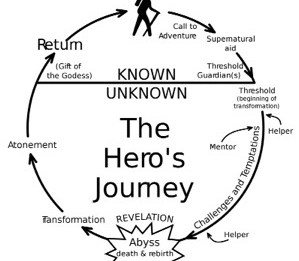
Hero’s Journey picture used from http://paperhangover.blogspot.com/2011/06/writing-101-story-circle.html

(REPOST) The Why of Weapons: The Great Sword of War

This is a fabulous well-researched piece on weaponry. (Definitely online with the avoiding the four-door horse, I’ll explain later. Anyway, I wanted this both at my fingertips and to share it. Hope you enjoy!

Mythic Scribes
Fantasy Writing Community

The Why of Weapons: The Great Sword of War

2014-01-25 13:40:20-05
The Why of Weapons: The Great Sword of War
This article is by Joseph Malik.

Today I’m going to discuss an underrepresented weapon in fantasy, although it was likely the single greatest casualty-producing weapon on the medieval battlefield until the development of the longbow.

A Gran Espée de Guerre by Michael “Tinker” Pearce. (www.tinkerswords.com)

It’s a sword. It’s arguably the sword. It’s the Oakeshott Type XIIIa great sword of war, referred to as a gran espée de guerre.

Calling it a sword is something of a misnomer, as it was really a demolition tool that happened to be sword-shaped.

Weighing between two and three pounds, a gran espée de guerre typically had a wide 30- to 40-inch blade, six to ten inches of handle, and a spatulate tip built to shatter bones and wreck armor. This sword was typically not ornate. Soldiers didn’t trick out their grans espées de guerre because construction workers don’t trick out their shovels.

The gran espée de guerre is often called a “greatsword,” and is often incorrectly referred-to as a “two-handed sword.” It is, in point of fact, a sword intended to be used with two hands but it works just fine with one. Assuming that your hero can get a hand around it, of course. (Halflings, Hobbits, Kender, gnomes, and dwarves, you can just leave now. We’ll catch up with you in a few articles when we get to the saxe.)

Despite frequent depictions in historical literature and art, fantasy authors often overlook the gran espée de guerre, going instead for either the two-handed Type XX, the Scottish Claymore, or something equally monstrous (bigger, of course, is always better).

Eddard Stark rockin’ a true “Two-Handed Sword,” an Oakeshott Type XX. The Type XX is a descendant of the Type XIIIa, and came into use a few hundred years later as a raised middle finger to knights in full harness. (HBO Entertainment)

In fact, the greatsword is so widely misrepresented, and apparently so misunderstood, that a Google search for “greatsword” returns this in the first ten results:

Ah, yes. The medieval greatsword. History is awesome. (monsterhunter.wikia.com)

And this:

You will put so much more than an eye out with that thing. (skreems.deviantart.com)

The gran espée de guerre was a professional soldier’s primary weapon from about 1100-1350 AD, the sweet spot of the Dark Ages where a lot of authors choose to place their fantasy milieus. For nearly three hundred years, it was the greatest casualty-producing weapon – maybe not the killing-est, but the hurting-est – and consistently the weapon that would get its wielder off a field in one piece.

Then, as now, soldiers used what they used because it worked at the time. Let’s look at why.

The gran espée de guerre was heavier than a longsword, not as deadly sharp as an arming sword, and not as task-specific as a true two-handed sword like the Claymore. It combined many different facets of metallurgy and physics to produce perhaps the ultimate hand-to-hand combat weapon of its day.

To understand this, you first need to understand that armored combat is not fencing. Nor is it tightly-regulated re-enacted historical competitive combat you see at the (insert historical society of your choice) Faire. It’s not even close. Sword-shield-sword-shield-bam-bam-bam makes for a fun sport, but the myriad safety considerations of sport combat reduce you to a hideously small range of options that, on a battlefield, would get you murdered in short order.

Hand-to-hand armored combat – whether it’s in helmets and hauberks or modern IOTV’s – is a matter of wearing your opponent down until he no longer presents a threat. Period. In advanced military combatives, where we learn to engage opponents in heavy body armor, we train to throw, sweep, stomp, choke, lock, and break bones. You engage and neutralize the threat. And you do it with a degree of abandon because your body is not merely protected in armor; it’s weaponized.

Trends and customs come and go, but the basis of physical combat has not changed. Medieval armored combat, like modern armored combat, was a matter of trying to break the other guy apart inside his armor between weapon strikes.

And that brings us to armor.

Your character is not going to cut someone in half through his armor. That’s why armor existed. If anything in the day could cut through armor easily, people wouldn’t wear it. That has not changed throughout history. (If you run up against a weapon that you know for certain will compromise your armor, you leave. That, also, has not changed throughout history.)

Armor has always sucked. It sucked for the Etruscans. It sucked for the Romans. It sucked for the Norse. It sucked for the Mongols. It sucked for Harold and his armies. Even our modern armor in today’s military – the Interceptor and the IOTV and even the Dragon Skin back when we could use it – sucks. Soldiers wear armor, and have always worn armor, despite the fact that it sucks; we wear it because it works. I’m a professional soldier. If I knew I was going into a fight where my armor wasn’t going to matter, believe me, I would leave it in my tent. Any soldier would.

Armor works.

Check that. Most armor works. (Second Life)

A different avenue to threat neutralization was to wreck your opponent’s armor to the point where he either had to retreat for his own safety, or where he could no longer fight effectively because all his broken armor was hampering his mobility. The gran espée de guerre was designed for this. It might not kill an opponent, but it would neutralize him, and that was plenty.

Steel was prohibitively expensive at the time the gran espée de guerre was in use, so most armor was made of iron. Look up the shear steel process and then imagine making a suit of armor from it. Go on; I’ll wait.

Having a suit of steel armor in 1100 AD would be like driving a car made of hammered gold today.

Armor from 1000-1300 AD was primarily iron mail, with reinforced areas of wrought iron, cuir boulli, and, very occasionally, steel. (The full field harnesses we saw in pseudo-historical-fantasy atrocities like John Boorman’s Excalibur didn’t come about until a couple of hundred years after the gran espée de guerre had outlived its usefulness, at which point the massive Type XX greatsword was giving their wearers a run for their money.)

Sword edges around this time period were made of steel, typically welded onto iron spines. Steel is harder than iron, but iron has flexibility and impact resistance, called ductility, that steel lacks. The flexibility of an iron spine meant that your sword wasn’t as likely snap in half while you were beating someone up with it.

In order to make a flexible blade that still had sharp edges, the Europeans – and the Romans before them – welded steel edges onto iron spines. There were other ways to come up with a workable result, but welding was the most convenient and cost-effective solution, and it must have worked because it’s how people made swords and tools for over a thousand years.

A broken-back saxe blade by Jeroen Zuiderwijk, moderator at swordforum.com. Note the weld line along the edge where the steel is folded into the iron. Historically-accurate swords would have a line like this along each cutting edge.

A carbon steel edge will bite into iron the way a diamond will bite into glass. The gran espée de guerre coupled this differential in hardness with a peculiar type of edge geometry: a stout edge with a bevel that made it functionally less like a kitchen knife and more like a splitting maul. This was not a particularly sharp edge by any definition that you’d recognize today. It would not shave you, nor part a dropped silk scarf like a katana, nor do any of the other magically-sharp stuff that a hero’s sword always seems to do in fantasy novels. In point of fact, you’d have to punch the edge of the sword to cut yourself on it.

No, seriously.

The reason you don’t use a “sharp” sword against armor is that sharpness, in simplest terms, is reduced drag. Reduced drag results from a combination of edge bevel and sectional density. In order to make an edge razor-sharp, you have to file down the edge until it is quite thin. This makes for a long bevel with a very shallow slope (authentic swords didn’t have secondary bevels the way modern kitchen knives do). This is the edge you find on a straight razor, and it is ridiculously delicate. Straight razors are honed with a leather strop, literally aligning the molecules.

If you slam an edge that delicate against plate iron, you will make a useless spot on the blade. (If you drop a straight razor onto a marble countertop, you can destroy it.) This is why I sigh inwardly every time I read fantasy works where the hero has a super-sharp battlesword and he’s cleaving badguys in twain, armor and all, as if it’s a lightsaber. He’d hack through about two and a half mooks before his sword became a metal cricket bat.

However, a gran espée de guerre, with its beefy edge and trick bevel on five or six feet of moment arm – arm’s length, plus blade – would sink its teeth into iron. It may not compromise the armor – it may not even draw blood – but that didn’t matter.

Stick with me on this.

The primary function of armor is not to stop a weapon, but to redirect it. Armor does this by either absorbing a weapon’s energy, or by glancing the weapon off a curved surface such as a cop, a plate, or a helmet.

Driven against an iron or cuir boulli surface, the beveled edge of a gran espée de guerre bites and transfers the full force of the blow instead of skipping off. A gran espée de guerre might not penetrate an iron helmet, but it would make a dent you could rest a cantaloupe in. That’s the kind of injury that sidelines a guy for days, if it doesn’t leave him drooling and twitching for the rest of his life.

Against a hauberk or byrnie, the gran espée de guerre transmits far more kinetic energy than other weapons of the time. The trick bevel not only damages the mail but carries the impact to the padding beneath. It hits like a crowbar, breaking bones under repeated blows before all but the finest mail falls away in tatters.

This has a lot to do with blade harmonics and center of effort, as well. If you look at the Type XIIIa . . .

Mmmm. Just look at it. It doesn’t mind. Go on and look.

. . . the ideal point of impact, where the main focus of the mass comes together, is just past the end of the fuller. The fuller serves to lighten the sword. Yet the tip of a Type XIIIa is built heavy. The weight is carried forward for the same reason that Abrams tanks fire rods and not big bullets: for maximum penetration, you want to stack mass behind the impact. The Type XIIIa is amazing for its concentration of effort. It is an engineering miracle, considering the time period.

A full-speed blow from a gran espée de guerre wouldn’t kill you in sturdy armor, but you’d be done for the day. A hit to the chest or back – or even a heavy blow driving the edge of your shield against your helmet – would leave you out of breath and seeing pink-and-purple Rorschach tests everywhere for a few minutes, and you would probably have to be carried off the field.

That’s what the gran espée de guerre brought to the fight: BAM. “You’re done.” BAM. “You, too.” BAM. “I can do this all day.”

Up until now, we’ve discussed using the gran espée de guerre on foot. Brandished from horseback, it was a slate-wiper.

If you were a professional soldier – a knight or well-paid mercenary, as opposed to a conscripted mook with a spear and a linen jack – you brought home big bucks swinging this monster on the field, sending badguys home one after the other to get their armor fixed.

It was a “Great Sword of War.” A war sword.

The war sword.

The weapon is not undefeatable. You can counter a greatsword by engaging with a gran espée de guerre of your own, or bum-rushing the wielder with five or six of your buddies and taking him down. Ideally, you’d use a combination of both. One or two of you are going to get injured or maimed in the process, though, and generally the caliber of military discipline required for such a stunt didn’t exist back then. So if you were wielding this sword on a battlefield, you’d find that things were pretty much going your way most of the time.

Soldiers carry weapons that get them off the field in one piece. That hasn’t changed since the days of living in caves and fighting with rocks and sticks. The gran espée de guerre is a weapon that did exactly that, yet it’s criminally underrepresented by authors who haven’t given a lot of thought to why their heroes carry the weapons they do.

There’s your why.

Your fantasy writing doesn’t have to be historically or physically accurate. But when you start digging into the history and physics of weaponry, you can come up with some interesting springboards for your own writing. Consider the gran espée de guerre and then look at your hero’s sword.

Most of all, have fun. And write, dammit.

Why do your characters carry the swords that they do?

About the Author:

Joseph Malik is one of the authors of The Syria Policy Playbook. He has worked as a stuntman, a high-rise window washer, a freelance writer, a computational linguist, a touring rock musician, and a soldier in U.S. Army Special Operations. He currently serves in the Army Reserve and consults for infrastructure development projects in areas of ongoing geostrategic concern. His blog on writing and fighting can be found at m-j-malik.blogspot.com.

See Also:

Medieval Archery for Fantasy Writers
Medieval Armor – A Primer for Writers
Ask Me About Swords

2014-01-26 17:02:16-05
Fantasy Writing Discussions January 27, 2014
No Adjectives Too?
OK, so I’ve heard people who are anti-adverb and I guess I understand that to an extent. I’ve since softened my stance against them myself. However,…
Trying to figure out the cost of Magic
I apologize in advance, I haven’t slept much in the past week, so this might get incoherent and rambley if it does, please feel free to tell me to…
Becoming grim-dark
So lately with all my world building, plot, characters etc I think I have created the apex of all crapsack world world’s. Mostly it’s my characters…
How to Explain Magic Without a Detailed Magic System
So I’ve got a WIP that will mainly be set in world at an early 20th century level of culture and technology. Now, I’ve kinda sorta got a magic system…
Age of gunpowder setting?
Recently i’ve been heavily contemplating reskinning my WIP from a medieval low fantasy to a…..Renaissance Low fantasy. After thinking over my major…
Critiquing a young writer’s first chapter
So this young man who watches me on DeviantArt asked me to review his story’s first chapter. I’ve given it a gander and I have to say I don’t care…
Starting a chapter with dialogue: okay to do?
I’m doing a fair bit of revision in Winter’s Queen, starting at the beginning and working my way forward. I’ve come upon a little problem between…
a question from other people
what makes a story timeless, is it their settings stories or characters? is it possible for one to make one on purpose? if so what do you think? put…
34. Cornelia Funke Discussion
Been a long bit (well, maybe not too long) since I posted a discussion. Cornelia Funke is number 34. This German children’s writer has been called…
Magic – attainable levels of power
In my WIP magic has several ‘levels’ of power, each one allowing a mage to cast different spells.Level 1: Bending – this is what new mages are…
Missed Opportunities for Self-Publishers?
I’ve mentioned this elsewhere on the forum and some other places, but I felt like it deserves its own thread. I’ve been thinking a lot about my…

Home | Forums | About | Contact | Unsubscribe from this Newsletter
P.O. Box 184, Portage, PA 15946, USA

Unsubscribe | Change Subscriber Options

Wrangling Interconnectiveness…Or No, We’re Not All Going To Get Along

20140125-181750.jpg

The world and its events are interconnected now perhaps more than any other time in history and it is remembering this interconnectedness which helps drive a good story plot and produce believable character development.

I’m going to bring up one of my groups I spend many predominately non-writing hours (Predominately because I do use it occasionally for research and ideas). This group is called the Society of Creative Anachronism or SCA. Okay…so what is it and why is it important?

Well, it is an international nonprofit group stretching throughout North America, Europe, Austalia, etc. and strives to recreate the best of the medieval world from the fall of Rome until around 1650. The people recreate, train, research and play with the various disciplines from combat (this it the place I fence) to the finer arts such calligraphy, leather working, brewing, costuming, and countless other application of things.

A fantastic group which I will now use as an example. This anachronistic band of tens of thousands find themselves competing with computerized game systems and battling the affect of rising gas prices which is bringing a trend of declining membership coupled with the need for a fresh infusion of new blood.

There is a current discussion going on on how to fix this. I bring it up just to show outside influences bring effect whether you want it or not.

There are no isolated happenings as I discovered when I moved from high school ‘point in time’ history with its focus on date memorization and no real context to – POW – college with viewing happenings in its much larger format. Such as ….What was happening politically? Economically? What was happening in the popular mindset? What other events had just gone down? What were the fears? The hopes?

These are great tools where you can even theorize and project probable happenings in today’s near future.

You might ask what does this have to do with writing?

Everything!

Unless you have put them there, how many protagonist live on a deserted island? Who and what have influences on them? Do you know why?

To back up just a little, my story is set in an approximate 14-15th century European-like setting which means I’ve considered styles of communication, the sciences, economics, faiths, popular mindsets, etc. I have gone through bouts of analyzing every story thread to wrangle every drop of influence to cavalierly striding forward while muttering that the reader doesn’t need to know ‘that’ so perhaps I won’t have to either.

I’m closer to admitting it’s a real art form identifying all the important influences to a character or a situation because words on the page not only paint things directly but it swirls with subtle undercurrents as well.

Going forward now. As I’ve been working on my manuscript, I’ve had an interesting time figuring out how my characters get from one marker to the next, shuffling through what is truly important to the story and what is superfluous, and also what to reveal when. Part of this learning curve is my insanity of not writing one complete book as my first one but an epic series. (I’m choosing not to include the bad novelette I wrote when I was much younger about the runaways living in hidden apartments in the sequoias).

Anyway, this week, as I have been going through major revisions…I was able to identify where my protagonist’s love interest’s story arc felt incomplete.

(Yes, it was in the middle…imagine that)

Well, I’m happy with the set-up, pleased with the ending, enjoy the suffering he (Mathias) faces, and even happy with his external conflict with the leader of this Mithraic religious group and the puzzle and battles with the wererats but there was a point where Mathias just disappeared. I couldn’t even feel his pulse which was weird because I know I hadn’t killed him.

Well, Mathias (or his corpse) wasn’t talking nor any of his buddies or enemies or even his pegasus so I said fine. I decided to go back and look at his family history.

I went on location to one of the prettier rooms in my local library and sat down with my various timelines. I figured out all the people who are his most important/influential (good and bad)…parents, friends, enemies… and delved into what probably happened to him in his younger life along with the mindsets of his most influentials and why did they have them.

It was exciting and grueling…if you haven’t experienced this weird combination you can opt to shake your head…but I ended up with some real diamonds.

I now totally understood Mathias’ mindset of why he is extremely hesitant to admit love, why when he feels the pull of “more than attraction” he flees and why it continuously haunts him.

I’m excited about revising certain scenes this week because I have the tools to make them stand out and not just Mathias (POV character 2) is more 3-dimensional and he gave up some important secrets. This exercise also showed me unexpected interconnectedness with my protagonist, Aunia, and my third POV character, Wendalin.

Anyway, Happy Writing to you all! And please feel free to share what exercises you might be using to get to the most important interconnectedness in your stories.